AYODHYA RAM MANDIR:
Faith, Fervour, Furore
A TIMELINE
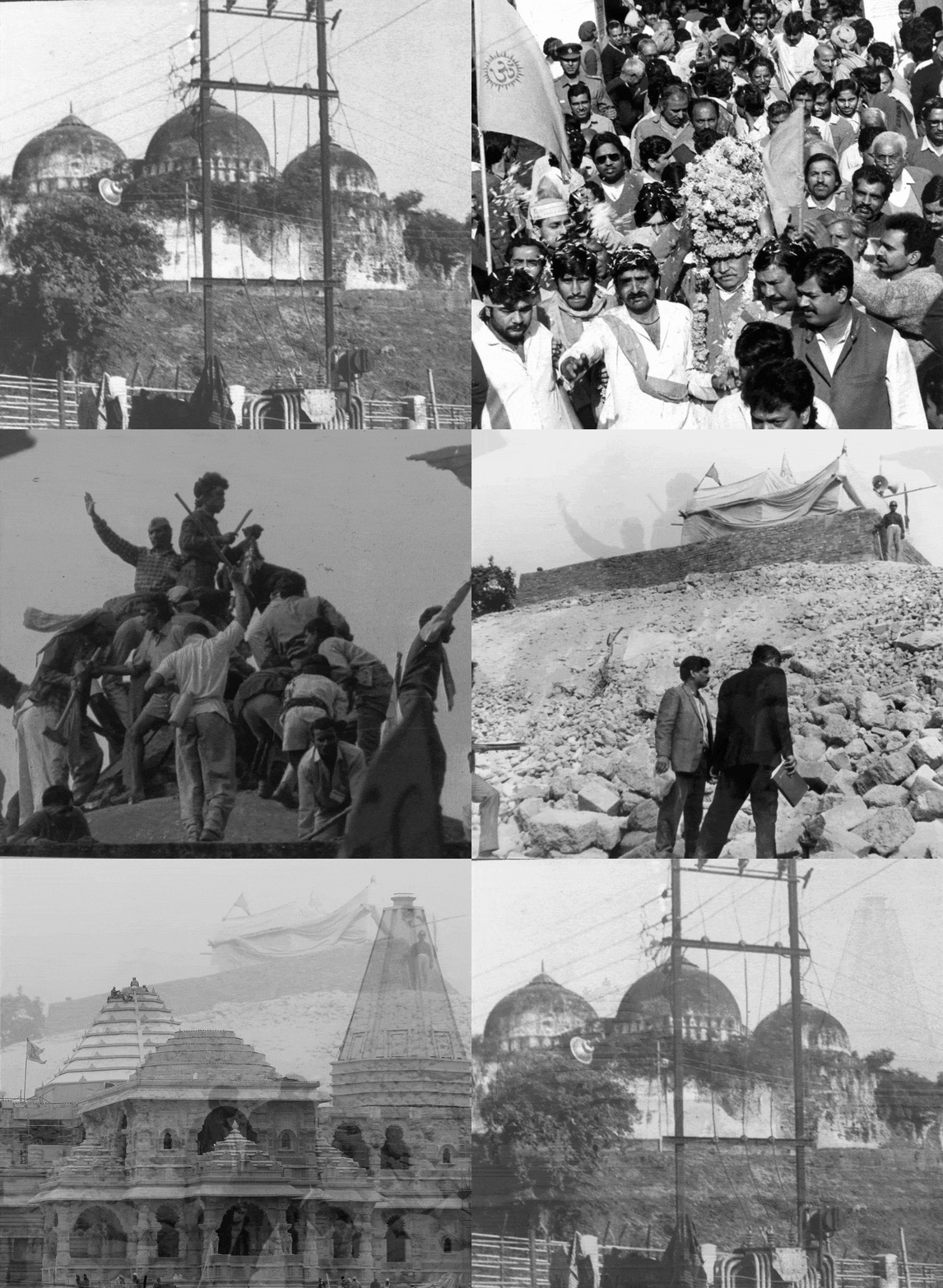


The Ram Janmabhoomi-Babri masjid dispute has stretched over centuries— it has been fought inside courtrooms and out on the streets, and has forever altered India's political landscape and social fabric.
After decades of conflict, the temple in Ayodhya is finally being consecrated on January 22, in what is slated to be a grand event commanding not just national, but global attention.
Yet, beneath the grandeur lies a bloody history—starting from before India's Independence, the dispute got final closure only after the Supreme Court judgement on the land in 2019. In between, India witnessed a Prime Ministerial assassination, the rise of Hindutva and the formation of the BJP, and a Rath yatra that shook the nation. At the heart of it all was the Babri masjid.
Here, we take a deep dive into all the events leading up to this pivotal moment in Indian history.

SEEDS OF UNREST
Beginnings of communal
clashes in Ayodhya



The patch of land in Ayodhya, which purportedly belongs to Lord Ram and where the Babri masjid once stood, has long been witness to parties staking claim to it, with disputes going back to the pre-Independence era.
The earliest record of the dispute over the site is by an Austrian Jesuit priest, Father Joseph Tieffenthaler, in 1770 AD.
Nearly a century later in 1862-63, Alexander Cunningham, the first Director General (DG) of the Archaeological Survey of India (ASI), carried out a survey of Ajudhya (Ayodhya) with the primary interest of identifying historical places he'd come across in Buddhist pilgrim records of Xuanzang and Faxien.
While recording oral traditions and places associated with the tale of Ramayana, Cunningham chances upon one about Lord Ram's Janam Asthana or birthplace temple being located in Ayodhya. However, he also recorded the existence of other items—like the hair and nails of the Buddha—during his survey of the ancient city.
Cunningham noted the presence of several Brahminical temples, but addressed the fact that they were modern constructions. Amid all this, he never mentioned Babri masjid, despite having heard the tale of Lord Ram's birthplace.
Although sporadic clashes would break out between Hindus and Muslims in Ayodhya up until 1947, the movement to reclaim the site in Lord Ram's name would only gain steam post-Independence.

Disputed Grounds

1528
Although the exact date of the construction of Babri masjid is not clear, inscriptions found on the premises indicate that it was constructed around 1528 AD by Mir Baqi, on the orders of Mughal emperor Babur.

1855
Clashes between Hindus and Muslims break out in Ayodhya, but not over the Ram mandir/Babri masjid dispute. At the centre of the chaos lies the Hanuman Garhi temple—Sunni Muslims and Bairagis clash following the former's claim that the temple was built on a mosque.

1859
A fence is erected at the Babri masjid site by the British administration as belief about the Babri masjid being the birthplace of Lord Ram gains momentum.
January, 1885
Mahant Raghubir Das files a plea in the Faizabad district court, seeking permission to build a canopy outside the Babri masjid. The petition gets rejected.
March, 1934
Fresh riots between Hindus and Muslims in Ayodhya, around the time of Bakrid, leave the domes of the mosque damaged. These are later repaired by the British government.

BIRTH OF A MOVEMENT
Legal battles and the genesis
of the Ram mandir movement


It was the epoch of belief, it was the epoch of incredulity. The ‘magical’ appearance of Ram Lalla idols inside the contested site set the ball rolling, which saw the dispute move to the courts.
Later, it would turn out there was a very human hand behind the 'magic'. However, faith being as potent as it is, breathed new life into the demand. Suddenly, legal or governmental recourses did not cut it for those who believed that land was rightfully theirs and were increasingly taking to the narrative of 'Othering' Muslims.
As the tussle dragged on, it began to grow more violent. A sense of hatred towards this 'other' kept growing - something that would keep rearing its ugly head in the form of communalism from time to time, long after the Babri masjid had already been wiped away by an angry saffron wave.
The coming forty years would witness the rise of the Sangh Parivar, the formation of the BJP, and the emergence of a unified Hindu movement for the reclamation of 'Ram Janmabhoomi'.


December 22-23, 1949
Idols of Ram Lalla “miraculously” appear under the central dome outside the disputed structure.
While Hindus claim divine intervention, Muslims assert that the idols were placed by Hindu activists. The mosque gates are subsequently locked.
The then District Magistrate, K K Nayar, refuses to remove the idols from the mosque. Years later, he joins the Jana Sangh and becomes a Member of Parliament.
December 26, 1949
Three days after the installation of idols inside the Babri masjid, then Prime Minister Jawaharlal Nehru sends a telegram to then Uttar Pradesh Chief Minister Govind Ballabh Pant, expressing his concern over the developments.
"I am disturbed at developments at Ayodhya. Earnestly hope you will personally interest yourself in this matter. Dangerous example being set there which will have bad consequences," Nehru tells Pant.
1950
Legal battles begin—Hashim Ansari files a suit in the Faizabad court asking for the mosque gates to be opened for namaz. Subsequently, Gopal Simla Visharad and Paramhansa Ramachandra, on January 16 and December 5, respectively, file suits seeking the continuation of worship in the disputed site and the retention of the idols placed in 1949.
1959—1961
The Nirmohi Akhara, an influential Hindu group in north India, files a suit seeking possession of the disputed site. The Sunni Central Waqf Board of Uttar Pradesh also files a suit seeking the same, as well as the removal of the idols placed in the disputed site.
The Saffron Wave

August 29, 1964
M S Golwalkar and S S Apte, in collaboration with Swami Chinmayananda, form the Vishwa Hindu Parishad (VHP) to "consolidate and strengthen the Hindu Society."
February, 1981
Tired of atrocities by upper castes, 400-800 Dalit families embrace Islam in Meenakshipuram (now Rahmat Nagar) in Tamil Nadu. The event sends shockwaves through Hindu organisations, including the VHP and the then recently-formed Bharatiya Janata Party (BJP), prompting the former to build 200 temples for Dalits.
April, 1984
In response to the Meenakshipuram conversions, VHP Joint General Secretary Ashok Singhal organises the body's first 'Dharma Sansad' in Delhi, where the group resolves to reclaim Ayodhya first and organise a yatra to "awaken" the country and push for the unlocking of the gate of the disputed site.
October, 1984
Following up on its resolution, the VHP begins its 'Ram-Janaki Rath Yatra', which sets out from Sitamarhi in Bihar, with Ayodhya in its sights and Delhi as its final destination. With the start of the yatra, Singhal becomes one of the chief architects of the Ram Janmabhoomi movement.
Baba Lal Das, a Hindu priest appointed by the Lucknow High Court in 1981 for the idols placed at the disputed site, warns of unrest, bloodshed if the Babri masjid is demolished.
He is murdered on November 16, 1993, shot dead in the middle of the night, 20 km away from Ayodhya.



April, 1980
The year before the Meenakshipuram conversions saw a momentous occasion in Indian history—the formation of the BJP.
Born from a split in the Janata Party (1977—1980), which itself was formed from the erstwhile Jana Sangh, the saffron party established itself on April 7, with Atal Bihari Vajpayee as its president.
October-December, 1984
Although the BJP initially moderated the Jana Sangh's Hindu nationalist stance in a bid to gain a wider appeal, the approach failed to yield dividends.
In the general elections of 1984, conducted a couple of months after the assassination of Prime Minister Indira Gandhi on October 31, the BJP managed to win only two seats, while the Congress waltzed to a record victory, winning over 400 seats, riding a huge wave of sympathy in the wake of the assassination.
1986
Following a Faizabad court order directing the opening of the locks to the disputed site, the Babri Masjid Action Committee (BMAC) is formed in February with the intention of starting a campaign in support of the mosque and resisting the rising Hindutva wave.
Months after the court order and the formation of the BMAC, the BJP appoints Lal Krishna Advani as the party president, marking a shift from its earlier, relatively moderate stance to the Hindu nationalist one of the erstwhile Jana Sangh. Under Advani's leadership, the BJP would go on to become the political face of the Ram Janmabhoomi movement, and an electoral force to be reckoned with.
The Calm Before The Storm
July 1, 1989
A fifth suit is filed in the Faizabad court on behalf of the deity, Ram Lalla Virajman, by senior advocate Deoki N Agarwal, who claims to be the 'next-friend' or sakha of the deity. The suit seeks possession of the disputed site for the construction of a temple for Ram Lalla.
July 10, 1989
All title suits related to the disputed site are transferred to the Allahabad High Court.
11 days later, on July 21, the court forms a three-judge bench headed by the Chief Justice of the High Court for the trial of the suits.
August 14, 1989
On an application by the state of Uttar Pradesh, the Allahabad HC, in an interim order, directs all parties to maintain status quo with regard to the disputed site.

November-December, 1989
Despite the Congress' landslide victory in 1984, the 1989 elections saw the BJP come back with a vengeance—from two seats in 1984, the saffron party's tally grew to 85. Further, with the Rajiv Gandhi-led Congress losing its mandate, the BJP threw its weight behind the National Front, which formed the government with V P Singh as the Prime Minister. From a marginal force in the elections, the BJP had become kingmakers.

THE CHARIOT OF FIRE
Advani's Ram Rath Yatra and the ashes of the wake

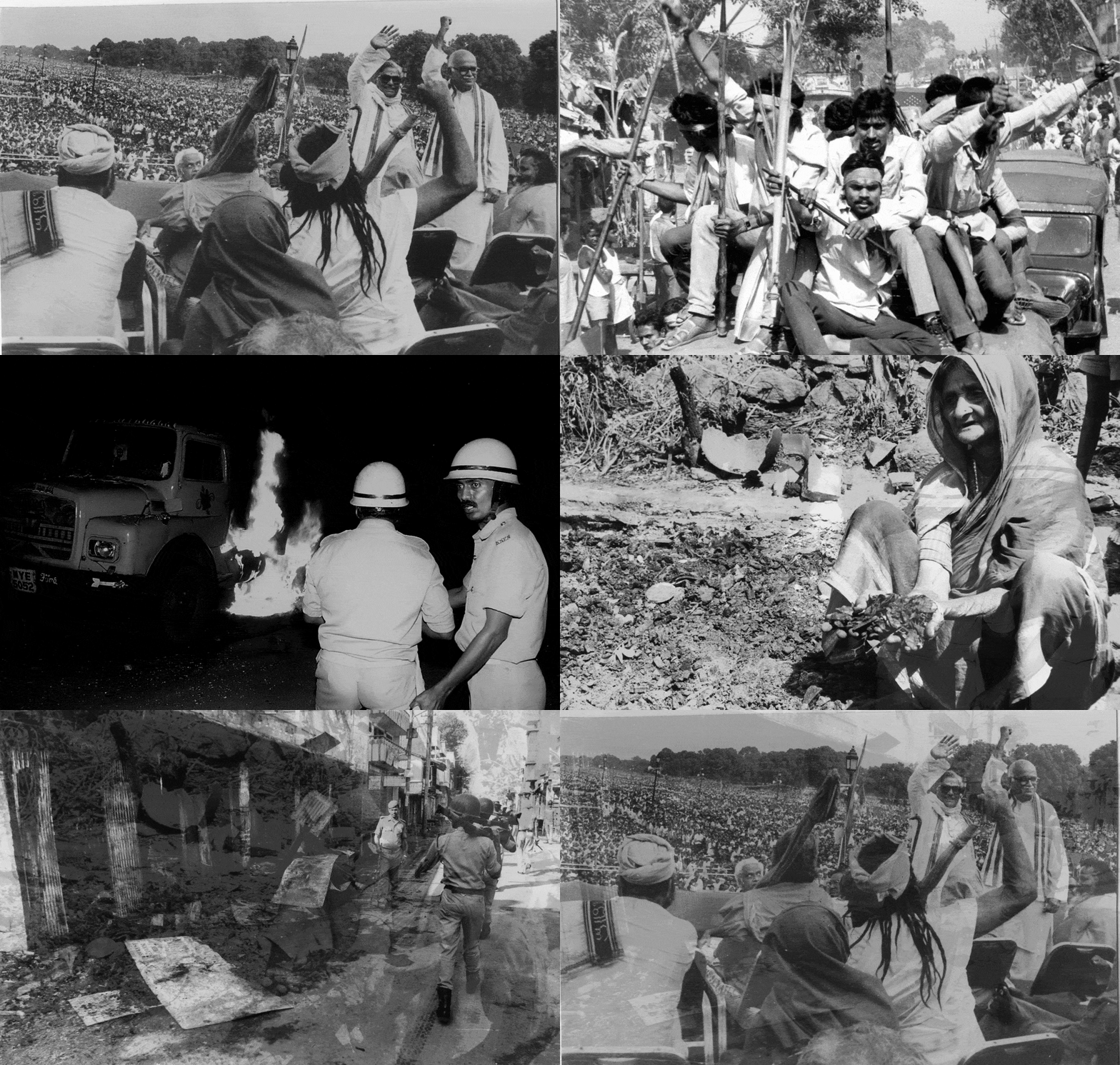

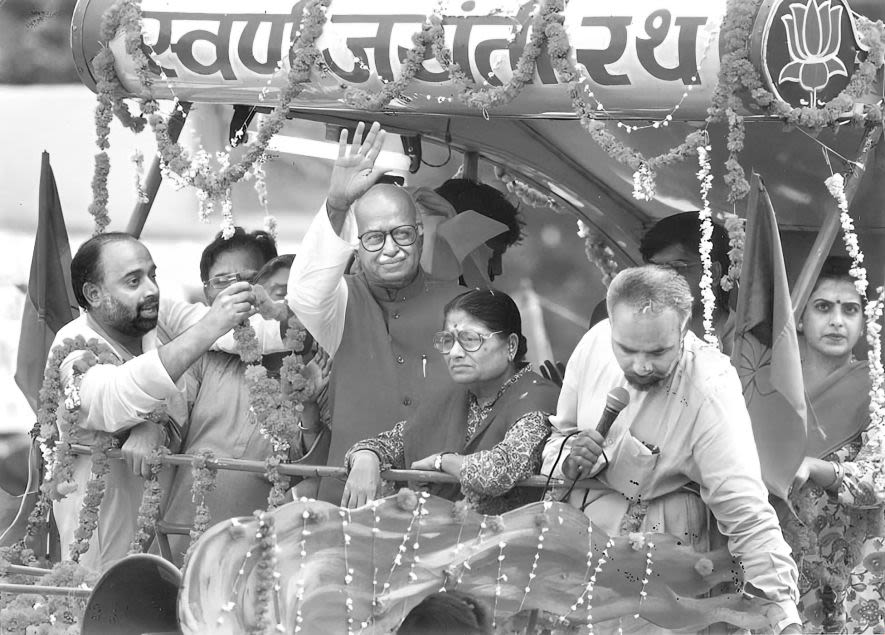
Initially planned as a ‘yatra’ on foot, L K Advani reportedly went with the Rath on Pramod Mahajan’s suggestion that the former would be too slow and that the BJP leader would risk diluting his message to the people.
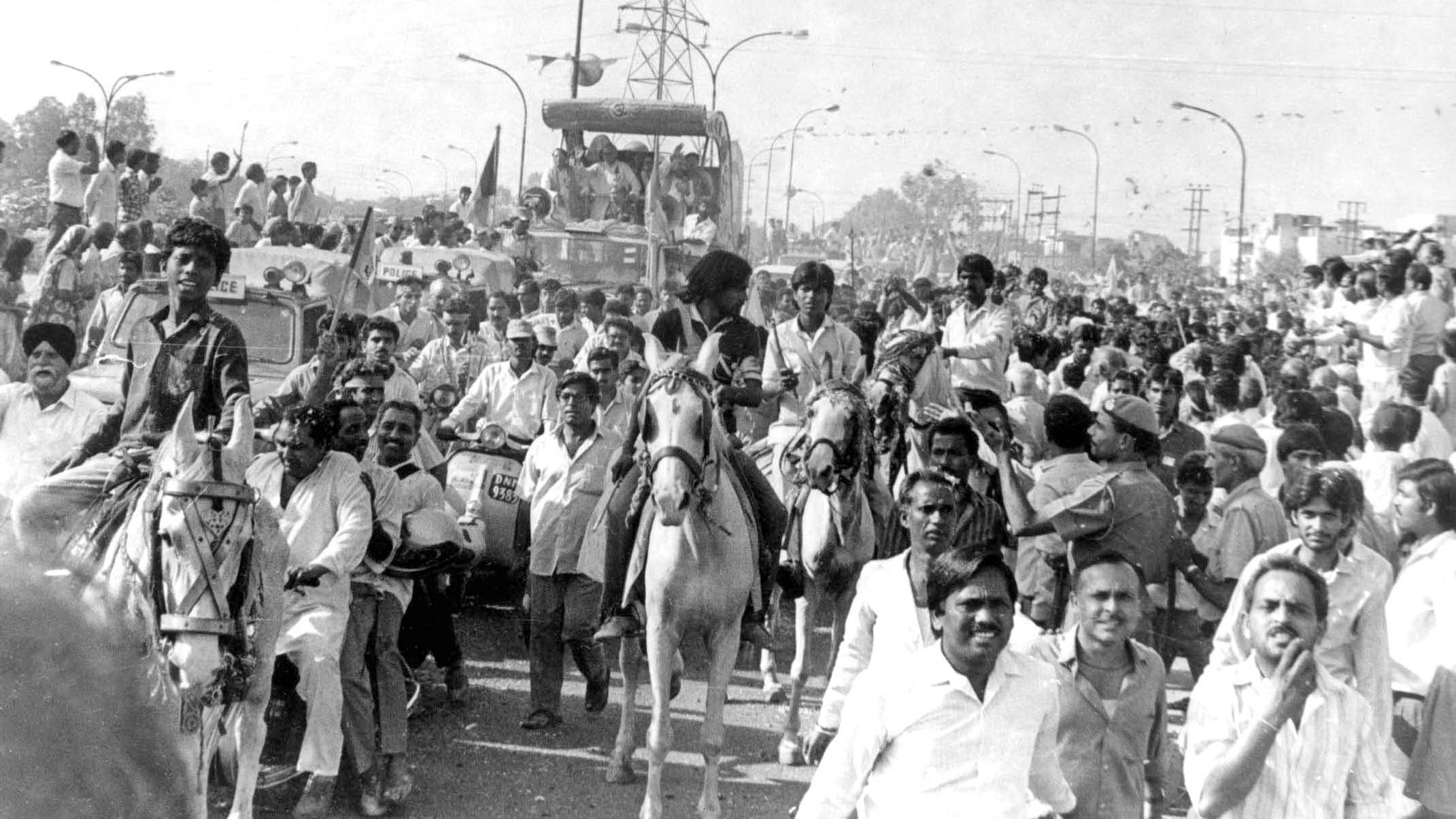
Advani’s Rath, which seemed as provocative as unstoppable, swept across northern India, but met an immovable force in Bihar when Lalu refused to budge—the BJP stalwart was arrested, setting into motion a series of events that culminated in the fall of the Central government. The then-Bihar Chief Minister, however, later noted that his decision sprung from wanting to maintain communal peace in the country.
As the yatra rolled on, the Uttar Pradesh Chief Minister at the time, Mulayam Singh Yadav, promised to maintain the peace in Ayodhya and resorted to police violence against karsevaks to try and enforce the same. The move backfired—communal tensions shot up, clashes erupted.
A couple of years after the police firing, then Uttar Pradesh Chief Minister Kalyan Singh assured the Central government that the Babri masjid would be safe. Karsevaks, moved by Advani’s words, proved Singh wrong.
Deadly riots followed.


August, 1990
The V P Singh government decides to implement some of the recommendations of the Mandal Commission, granting reservation in government jobs for OBCs. This move not only fosters resentment among upper castes, but also creates "unprecedented" inter-caste tensions, thereby threatening the BJP's Hindu electorate.
September 25, 1990
In response, Advani, who had already announced the BJP's backing for the VHP's demand for a Ram mandir in 1989, launches a Rath Yatra, not only to push for building the temple at the disputed site, but also to "reunite Hindus" against the "Muslim Other". The yatra, launched from Somnath in Gujarat, aims to reach Ayodhya after travelling through multiple cities.


October 24, 1990
In the wee hours of October 24, Advani is arrested during the Bihar-leg of his journey on the orders of then Chief Minister Lalu Prasad Yadav to maintain “peace and harmony”.
Karsevaks, however, continue their march to Ayodhya despite Advani's arrest, heightening communal tensions along the route of the yatra.
Soon after, Atal Bihari Vajpayee marches to the Rashtrapati Bhavan and withdraws support to the V P Singh-led National Front government, which collapses after 11 months in power.
October 30, 1990
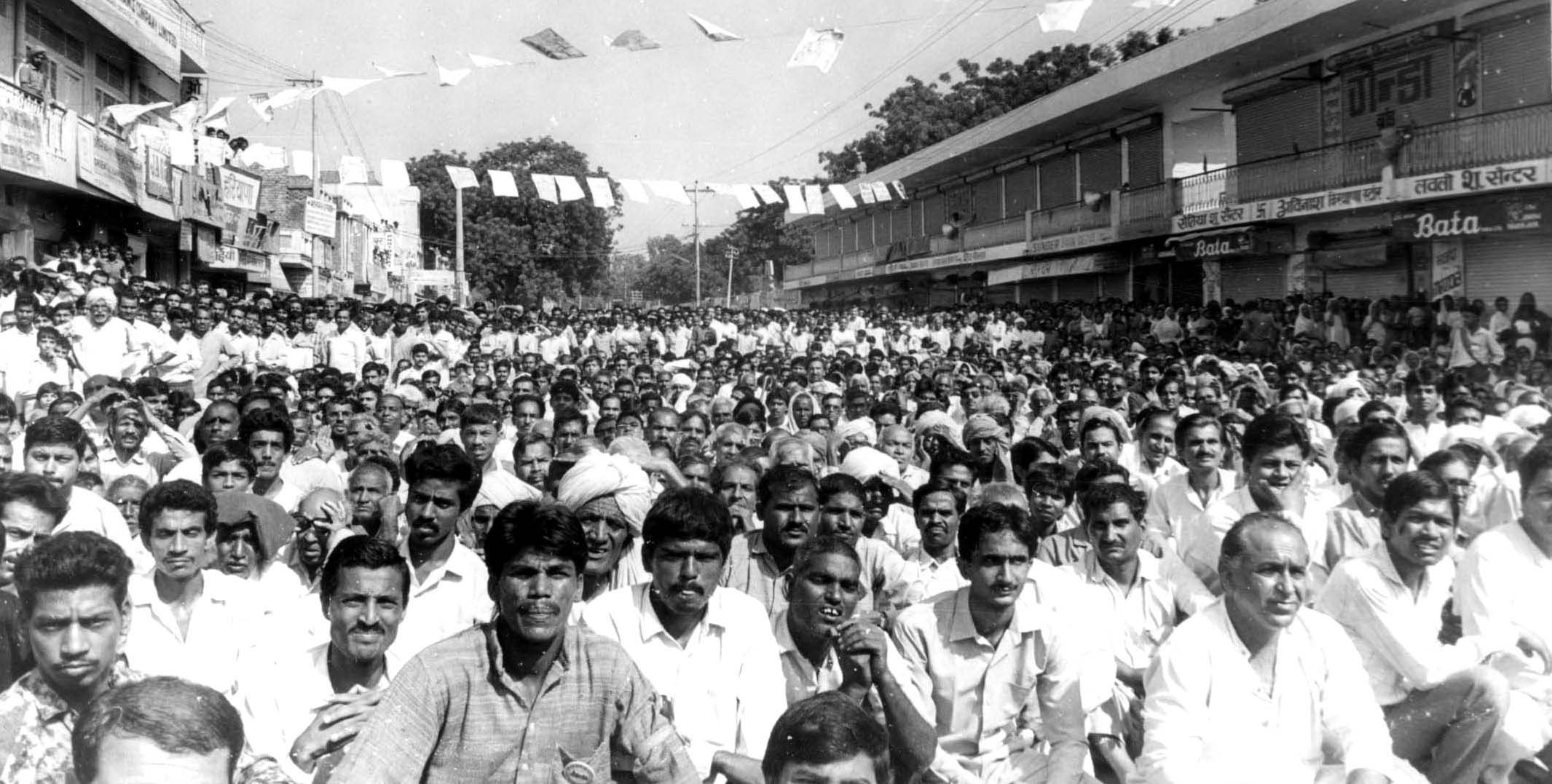
Days after Advani's arrest, tens of thousands of karsevaks (estimates put the number between 40,000 and 75,000) reach Ayodhya as the VHP prepares to hold a procession, which had already received clearance from then Chief Minister Mulayam Singh Yadav.
However, despite their promise to leave the Babri masjid intact, karsevaks scale the dome of the structure in a bid to tear it down.
In retaliation, police open fire, killing several karsevaks. The Babri masjid remains intact.
Post cremation, the ashes of the slain karsevaks are taken across the country by the VHP, and Hindus are urged to avenge their deaths.
November, 1990
Amid the communal tension, riots break out. While some of these riots occur in areas that do not fall in the route of the yatra, they are nonetheless triggered by it.
In fact, according to eminent historian K M Panikkar, as many as 224 communal riots took place between September 1 and November 20, 1990, with several breaking out following Advani's arrest and the firing on karsevaks. These riots left an estimated 564 people dead.


May—June, 1991
Elections are held following the collapse of the National Front government.
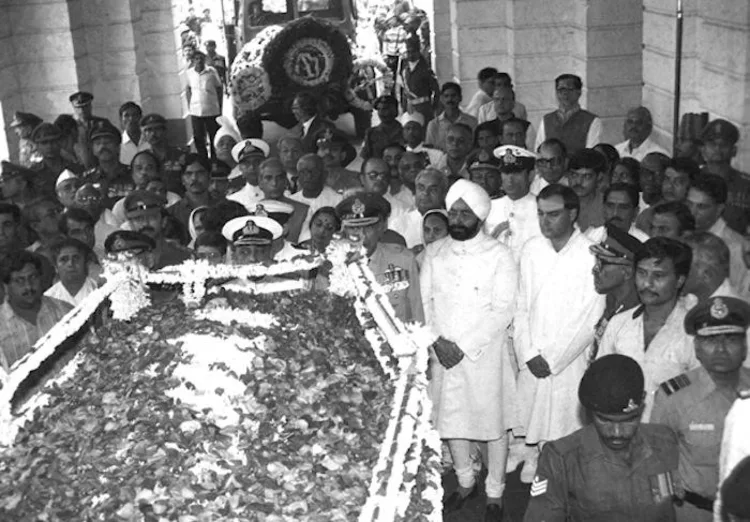
A day after the start of the elections, Rajiv Gandhi is assassinated on May 21 while campaigning in Tamil Nadu. Election dates are pushed back to June.
No party is able to muster a majority in the Lok Sabha, but the Congress emerges as the largest party and forms a minority government with P V Narasimha Rao as the Prime Minister.
The BJP, meanwhile, doubles its vote percentage in comparison to the 1989 polls, and emerges as the second-largest party.
December 6, 1992
DEMOLITION OF
BABRI MASJID

Around 1,50,000 people gather near the disputed area to listen to speeches by BJP and VHP leaders, including L K Advani, Murli Manohar Joshi, and Uma Bharti, amid heavy security deployment.

The crowd grows restless as the hours pass. Around noon, a person manages to slip past the security cordon around the disputed site and climbs the Babri masjid, brandishing a saffron flag.

Taking the saffron flag as a signal to attack, the mob proceeds to storm the disputed site. Despite heavy security deployment, police personnel stand down, reportedly on the directions of then Chief Minister Kalyan Singh, who insists against the use of force on the karsevaks.


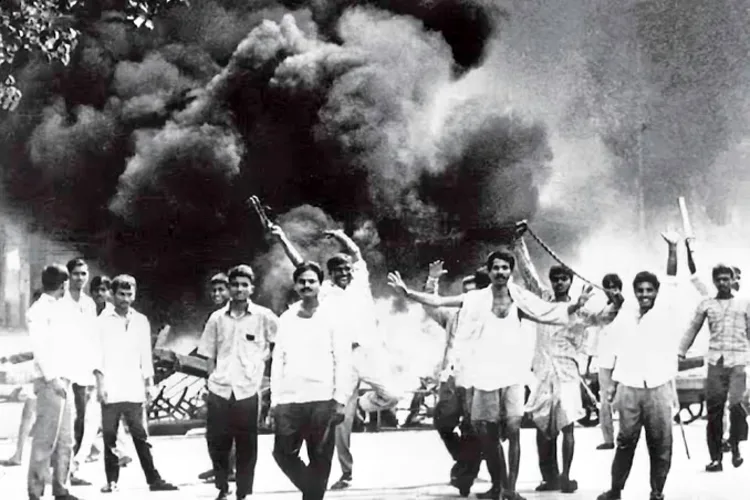
Having surged past the security cordon, the incensed crowd then attacks the Babri masjid with hammers, axes, and other tools.
Within hours, the building is reduced to rubble.
On the same day, two FIRs are registered—one against unknown workers and the other naming Lal Krishna Advani, Murli Manohar Joshi, Ashok Singhal, Vinay Katiyar, Giriraj Kishore, Vishnu Hari Dalmia, Uma Bharti, and Sadhvi Ritambhara.
December, 1992
The aftermath of the demolition of the Babri masjid brings death and destruction. While the main leaders of the movement such as L K Advani are taken into protective custody, riots engulf Ayodhya as karsevaks celebrate the felling of the mosque by attacking Muslim localities and setting homes on fire.
The riots, sometimes instigated by Hindus and at other times by Muslims, spread like fire, engulfing large parts of northern and western India. Hundreds are left dead in their wake—246 die in Gujarat, 120 in Madhya Pradesh, 100 in Assam, 201 in Uttar Pradesh, and 60 in Karnataka.
In response, the P V Narasimha Rao government sets up the Liberhan Commission to probe the events leading to the demolition of the Babri masjid.
Meanwhile, the commercial hub of Bombay bears the brunt of the spreading riots—in the days immediately following the Babri masjid demolition, clashes break out across the city, with Muslims targeting Hindu establishments, and Hindus, led by the Shiv Sena and the BJP, attacking Muslim homes and localities.
As Bombay burns, Shiv Sena founder Balasaheb Thackeray indicates that it's only the start—"the beginning of an era of retaliatory war," he writes.
The Army is called in, curfew is imposed, and order is restored ... temporarily.
January, 1993
Riots break out afresh in Bombay, sparked by the killings of two Hindu dock workers in a Muslim area.
As the news spreads, incensed Hindus attack and loot Muslim establishments, killing many, while Muslims retaliate.
The fires rage for a week till Balasaheb Thackeray calls for an end to the violence: he announces that "the fanatics had been taught a lesson".
Nearly 800 people lose their lives in the riots of December '92 and January '93, two-thirds of them Muslim.
SCAR TISSUE
A protracted legal battle and
the re-opening of old wounds


April, 1993
The Centre acquires 67.7 acres of land in the Ram Janmabhoomi-Babri Masjid site following the passage of the Acquisition of Certain Area in Ayodhya Act to "set up a Ram temple, a mosque, amenities for pilgrims, a library, museum and other suitable facilities".
Ismail Faruqui challenges some aspects of the act.
October, 1993
Investigation into the Babri masjid demolition is handed over to the Central Bureau of Investigation (CBI).
A composite charge sheet is filed accusing Advani, Murli Manohar Joshi and Uma Bharti, among others, of conspiracy.
October 24, 1994
The Supreme Court rejects Faruqui's plea challenging the act, holding that a mosque is not an "essential part of the practice of the religion of Islam" and that namaz can be offered anywhere.
With this, the SC upholds the Centre's acquisition of the disputed site as constitutionally valid.

2001
The VHP reaffirms its resolve to build a Ram temple at the site where the Babri masjid was destroyed.
Tensions rise in the country on the anniversary of the demolition.

February, 2002
The BJP downplays the Ayodhya issue in its manifesto for the Uttar Pradesh Assembly elections.
The VHP announces March 15 as the date to begin the Ram mandir construction at the Ayodhya site.
On February 27, 59 people including Hindu pilgrims and karsevaks who were returning from Ayodhya are killed after Sabarmati Express is burnt at Gujarat's Godhra.
Massive communal riots break out in the state.

August, 2002
The Allahabad High Court begins hearing arguments regarding the title case of the disputed area and ordered the Archaeological Survey of India (ASI) to excavate the site for historical evidence.
A year later, in August, 2003, the ASI submits its final report, claiming to have found evidence of a 10th century Hindu temple at the site.
Subsequently, the SC orders status quo on the site, barring religious activity till the settlement of the title suit pending with the Allahabad HC.
A special CBI court drops proceedings against Advani, Murli Manohar Joshi, Uma Bharti, Bal Thackeray and others in May, 2001.
More than a decade later, in 2017, the SC would reopen conspiracy proceedings against leaders such as Advani, Joshi, and Bharti, who were present at the time of the demolition. However, all accused in the case would get acquitted on September 30, 2020.
2009
After over 16 years, the Liberhan Commission submits its report on the Babri masjid demolition, holding the top leadership of BJP and Sangh Parivar culpable for the incident.
2010
In a 2:1 majority, the Allahabad HC rules that the disputed land in Ayodhya must be divided among the Sunni Waqf Board, Nirmohi Akhara, and Ram Lalla.
Later, appeals are filed against the high court's order.
2011
A two-judge bench of the SC, while hearing the appeals made by both Hindu and Muslim sides, stays the HC verdict and orders status quo in the disputed site, calling the land division "strange".
THE 'CHOSEN' ONE
Modi's tryst with destiny



The swelling Hindutva wave reached a crescendo in 2014, propelling Narendra Modi into power, a victory that was as emphatic as it was strategic.
Already a prominent face in Hindu nationalist circles due to his proximity with the RSS top brass, Modi did not have to overly tout his Hindutva credentials and instead focussed on issues such as corruption, development, and good governance, thereby expanding his appeal beyond the BJP's traditional base. Simultaneously, he deployed Hindutva to mobilise Hindu nationalist sentiments in areas and contexts where the BJP could extract maximum electoral mileage. The result? The BJP won 282 seats, securing the largest majority since 1984.
He did it again in 2019, only better. And now, Modi is eyeing his third term as PM.
Since Modi became PM, he has slightly altered his stance towards the Ram Janmabhoomi issue. Starting off as an active volunteer in the movement, and someone on the frontlines of Advani’s Rath Yatra, Modi since assuming office has oscillated towards a legal solution to the dispute.
2019 saw the landmark Supreme Court judgement, paving the way for the Ram mandir to be officially built, and Modi, who had for long been on the sidelines of the temple movement, placed himself right at the front and centre.
The PM announced in Lok Sabha in 2020 that a temple trust would be set up. Later that year, the official foundation stone was laid by Modi, following the ‘bhoomi pujan’.
Destiny, it seemed, had picked Modi to further Advani's legacy. Acknowledging the same, the 96-year-old BJP stalwart recently said, "He [Modi] was not very famous then. But at that very time, Lord Ram had chosen his devotee [Modi] to rebuild his temple."
Now, Modi is the chief ‘yajman’ or the host on whose behalf prayers will be offered when the Ram mandir is consecrated on January 22.
2017
With the title dispute still pending, the then Chief Justice of India J S Khehar urges involved parties to opt for an amicable out-of-court settlement. Meanwhile, BJP MP Subramanian Swamy pushes for an urgent hearing on his appeal filed against the HC verdict.
In August, the UP Shia Central Waqf Board agrees to settle for a mosque located in a "Muslim-dominated area at a reasonable distance from the disputed area" and slams its Sunni counterpart for not wanting an amicable settlement.
Then, in December, the SC begins hearing 13 appeals pertaining to the dispute, while refusing the Muslim community's request to defer the hearing until after the 2019 Lok Sabha elections.

2018
The SC begins hearing the title dispute and urges involved parties to treat the case as a "mere land issue".
With both the Hindu and Muslim sides seeking a quick resolution to the case, a three-judge bench led by then CJI Ranjan Gogoi orders the appeals to be listed before an appropriate bench in January 2019, to fix a date for hearings.
2019
In January, a five-judge bench is set up to hear the title dispute, but the hearing is soon put on hold after Justice U U Lalit recuses himself. The bench is again reconstituted and hearings begin.
In March, efforts by a three-member panel to mediate a final settlement between the disputing parties fail, prompting the SC to begin day-to-day hearings from August 6.
In September, the mediation panel is allowed to resume negotiations, and files its report confidentially to the SC following a 40-day marathon hearing on the case in October. The bench reserves its verdict till November 9.


November 9, 2019
The SC, in a unanimous landmark judgement, allows the construction of a Ram temple at the disputed site, while asking the Centre to allot a five-acre plot for a mosque in Ayodhya. The government is given three months to set up a trust for the construction of the temple and management of property. Celebrations break out.



February, 2020
Months after the SC verdict, PM Modi, in February, informs Parliament that his cabinet has approved the setting up of the Ram Janmabhoomi Teerth Kshetra for the construction and management of the Ram mandir.
At the same time, the Centre, as per the SC's orders, allots five acres of land for a mosque in Ayodhya, around 25 km from the disputed site where the Babri masjid once stood. The land is accepted by the UP Sunni Central Waqf Board, which sets up the Indo-Islamic Cultural Foundation (IICF) to build 'Masjid-e-Ayodhya'.
August, 2020
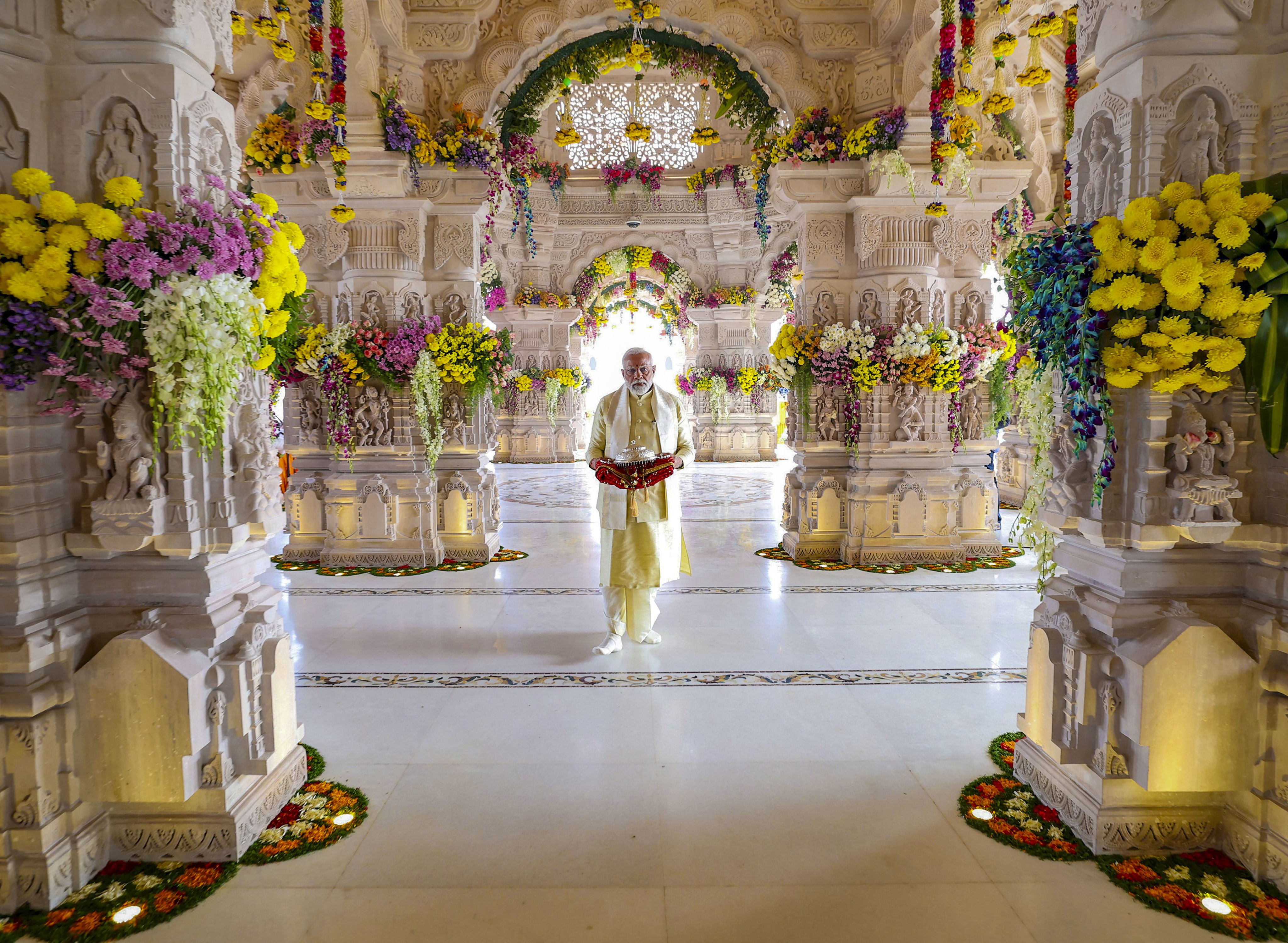
PM Modi performs ‘bhoomi pujan’ of the Supreme Court-mandated Ram mandir in Ayodhya on August 5, laying the foundation stone for the temple.
2020—2023
The first phase of construction began a few months before the 'bhoomi pujan', in March 2020.
As construction progressed, a viewing area was created in August 2021 to allow the public to witness the temple being built.
2024
The nation gears up for the grand consecration ceremony of the Ram mandir in Ayodhya—all major figures associated with the Ram mandir movement receive invites, with PM Modi slated to be at the centre of the ceremony.
January 22, 2024
PM Modi takes part in the grand consecration ceremony of the Ram mandir, thereby paving the way for its opening to the public.
January 23, 2024
The temple is opened to the public following the completion of the consecration ceremony by PM Modi.
Thousands throng to the temple, as a new era begins, marking the end of the 500-year-old wait.
(We’d love to hear from you! Feel free to reach out to us on webdesk@deccanherald.co.in with comments and suggestions.)